By Hamza Faisal
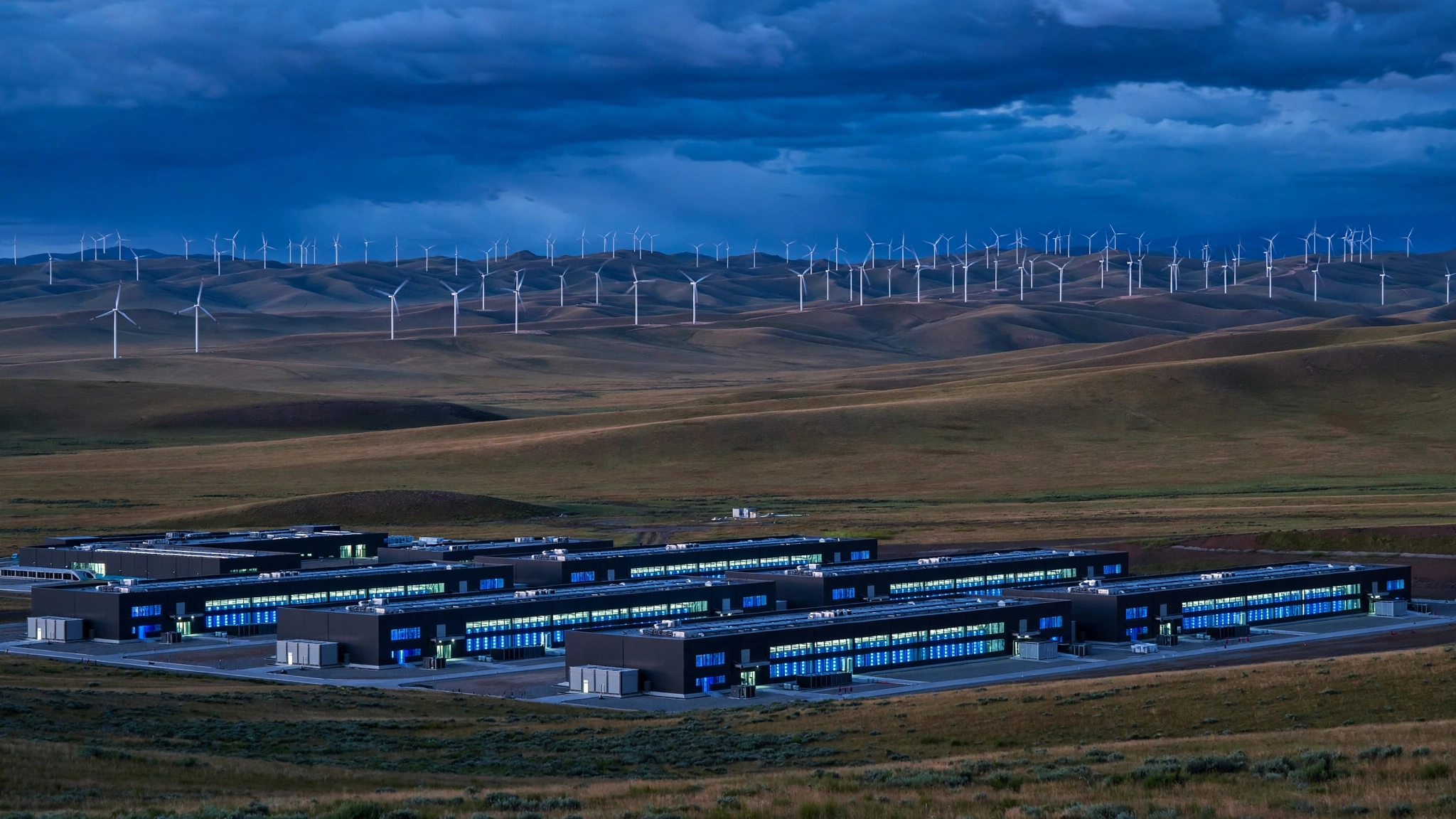
China has built an AI data centre campus on the scale of America's Stargate project — and it did the first phase in about a year, at roughly a fifth of what a comparable US build would cost. That is the finding of a first-hand site visit by research firm SemiAnalysis, published on November 7, to the Galaxy campus in Ulanqab, Inner Mongolia.
Galaxy is owned by Envision Group, a renewable energy systems company with more than 100 gigawatts of wind turbines installed worldwide. The campus is planned for up to 800 megawatts of IT capacity, putting it roughly on par with the core of Stargate Abilene, the Texas campus built for OpenAI, which SemiAnalysis puts at about 820 megawatts of critical IT capacity. Its first 120-megawatt phase was commissioned in August 2026, inside a 120,000-square-metre AI supercomputing building, and the full campus is expected to be finished by the end of 2027.
A fifth of the cost, built in a year
The speed and the price are the headline. SemiAnalysis estimates the first phase cost about a fifth of a comparable US build, with capital spending under $3 million per megawatt, colocation rents near $40 per kilowatt per month before power, and all-in electricity around $0.055 per kilowatt-hour. All four phases are being built to order for two Chinese internet companies the report does not name.
Wind, batteries and 800-volt power
What sets Galaxy apart is how vertically integrated it is. Envision did not just build the halls: it built the wind farms, the dedicated power line, the battery storage, the power modules inside the halls, and co-designed the prefabricated substation. The model is one China calls source-grid-load-storage — a single project that generates its own renewable power, stores it, and consumes it on site instead of drawing from the public grid.
Two wind farms totalling 420 megawatts feed a 240-megawatt data centre load, backed by four hours of battery storage, and Envision aims to supply more than 60 percent of the first two phases' power from its own wind. Inside the halls, a five-megawatt section already runs solid-state transformers that convert 10-kilovolt grid power straight to 800-volt direct current for the racks — an architecture still on the US roadmap. SemiAnalysis notes that roughly a quarter of Chinese data centres built in the past decade run on DC power, against about 97 percent of US sites still on AC power with uninterruptible power supplies.
What it means for the AI race
Galaxy is not a one-off. Inner Mongolia, China's fastest-growing AI data centre region, has 25 gigawatts of announced data centre projects, and Envision's wider plans in the region add up to three gigawatts. The region's Chahar High-tech Zone alone had nearly 30,000 construction workers across 22 data centre projects during SemiAnalysis's visit.
There are caveats. The cost comparison is SemiAnalysis's own estimate, not an audited like-for-like figure, and the report does not say which chips Galaxy will hold — the hardware is the one part of the campus the visit could not verify. Epoch AI has separately argued that China's compute gap with the United States comes from chips rather than power. But on the evidence of this visit, the power and the buildings are no longer the bottleneck: China can now deliver a Stargate-scale campus, wind-powered, in about a year, at a fraction of the American price.