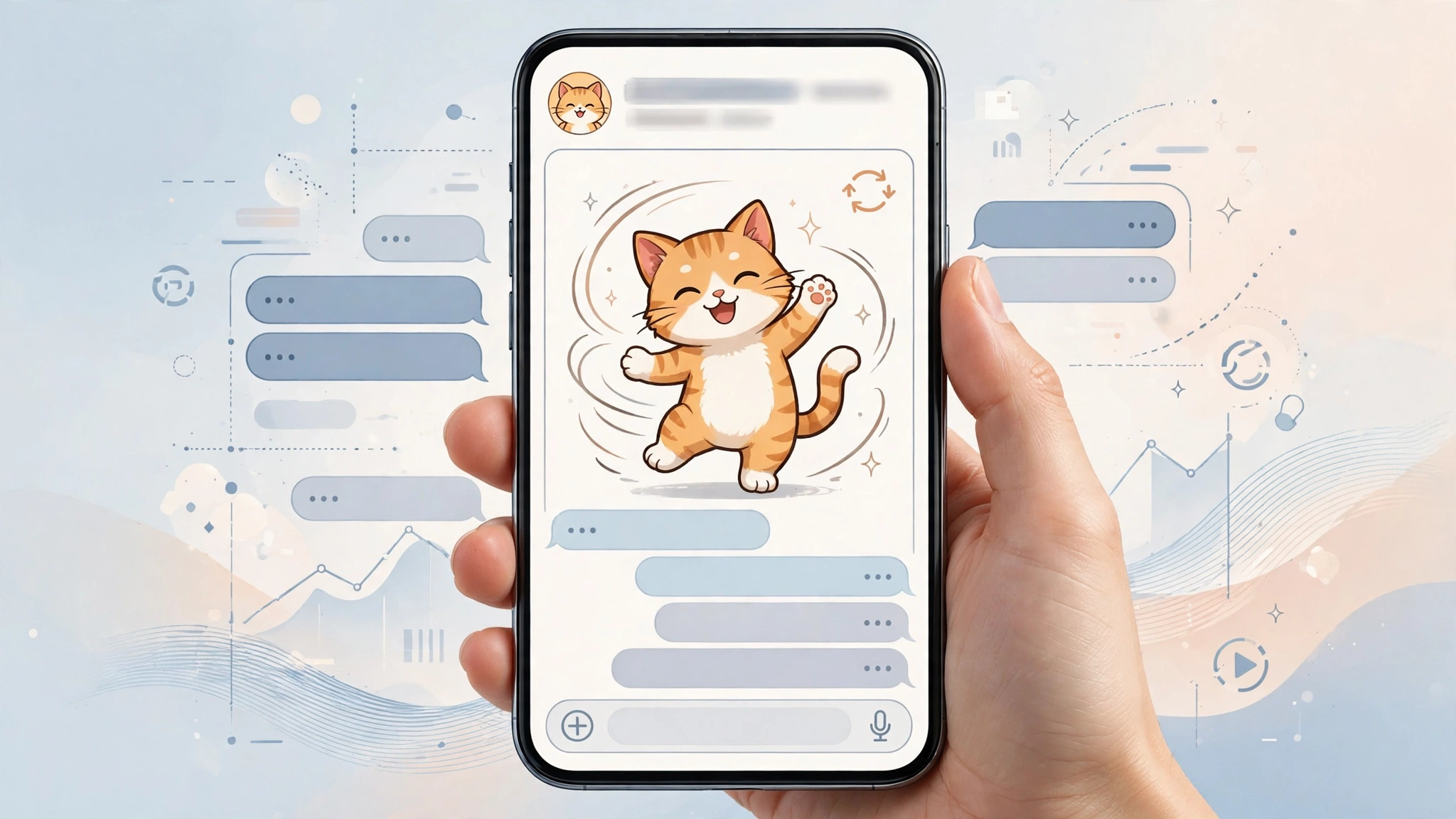
OpenAI has given ChatGPT a new trick: it can now turn a text prompt or a photo into an animated GIF. The company announced Images 2.6 on November 4, rolling the update out across ChatGPT and Codex on the web, desktop and mobile — including to free-tier users.
The headline feature is native GIF creation. Ask for a dancing cat, upload a doodle or a product photo, and ChatGPT returns a short looping animation instead of a still image. Users can adjust the playback speed, edit individual frames and share the result on repeat, turning what used to be a multi-tool job into a single conversation.
Speed is the other half of the update. OpenAI says Images 2.6 generates images 50 percent faster than its predecessor, two months after Images 2.5 arrived in September with a similar speed claim of its own. People are now generating more than 4 billion images a week across ChatGPT, Codex and the API, up from 3 billion in September — a pace that makes faster generation more than a nice-to-have.
GIFs you can actually edit
The GIF maker is built for tinkering rather than one-shot output. Animators can plan character movement with animated storyboards before shooting any video, and a rough sketch is enough for ChatGPT to turn into an animated character for videos or games.
The same tools serve everyday uses: reaction GIFs and memes from a photo, a brand mascot animated for a campaign, or a product shot that plays on repeat. Because each frame can be inspected and revised individually, a wobbly arm or a mistimed blink can be fixed without regenerating the whole clip.
Reference images that stick around
Images 2.6 also remembers. Users can now save reference images — of themselves, their pets or a recurring character — and reuse them across new creations without uploading them again each time.
It is a small change with a practical payoff: keeping the same face, pet or mascot consistent from one image to the next has been one of the fiddliest parts of AI image tools, and saved references remove the repeated uploads that used to stand in the way.
Flare and Sunburst for developers
Developers get two new API models. GPT-Image-2.6 Flare is built for speed and can produce an image in as little as six seconds on its low-quality setting, while GPT-Image-2.6 Sunburst focuses on detail, producing sharper images that stay consistent across edits on medium or high quality.
The API update also brings scalable SVG export and ChatGPT's image markup to developers, so teams can point to precise areas of an image when requesting changes. Both models are available through the API now, alongside the ChatGPT and Codex rollout.
For OpenAI, the update lands in a busy week for its image tools — and with 4 billion images a week flowing through them, even a modest speed gain touches a lot of creators.