By Hamza Faisal
ByteDance's Seed team has released Seedream 5.5, its next-generation image model, with a pitch aimed squarely at professional designers: edit the same picture again and again without it falling apart. The model launched on November 9, 2026, and is rolling out gradually across ByteDance's own apps, including Dreamina, CapCut, Doubao, BytePlus and Volcano Engine Ark.
The headline claim is pixel-level stability across repeated edits. ByteDance says Seedream 5.5 can apply up to 100 sequential local edits to a single image while preserving the composition, perspective and lighting of the parts left untouched. In a demonstration, the team made 100 edits in a row to one portrait and kept changing small details, such as rings and eyeglass frames, without the rest of the image drifting. That is the problem the model is built to solve: in most image editors, every round of editing degrades the picture a little, as each generated output becomes the input for the next revision and small errors pile up.
Transparent backgrounds, straight out of the model
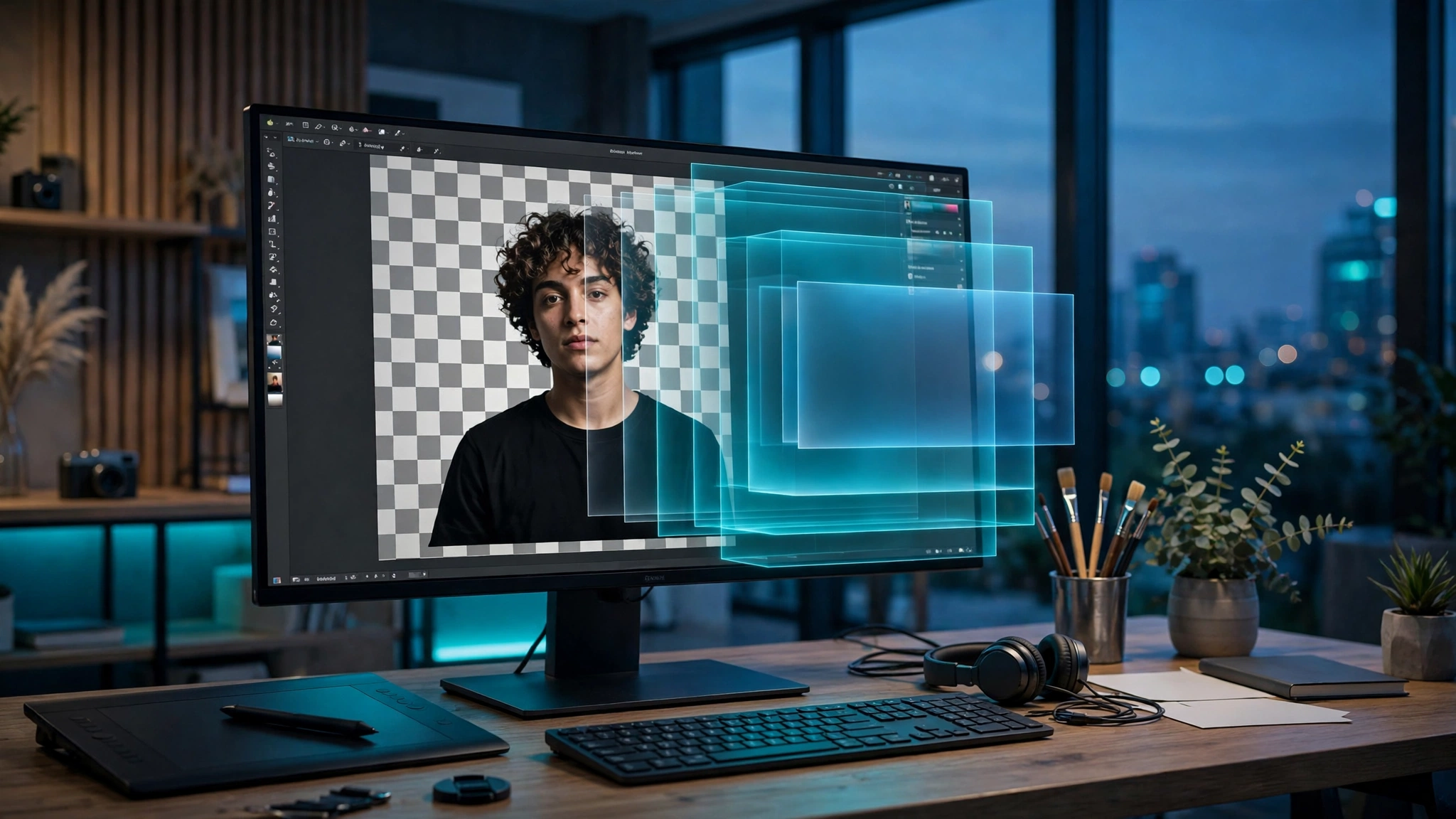
The second big change is native transparency. Seedream 5.5 can generate images with an alpha channel directly, producing RGBA output with fully or partly transparent areas — including tricky details such as hair and glass. ByteDance's examples include extracting a flamingo as a separate transparent layer and generating a running-girl sequence with each image on its own transparent layer. For e-commerce and marketing work, where product shots routinely need to be cut out and composited onto new backgrounds, that removes a step that usually requires separate masking tools.
The model also promises sharper text rendering, an area where image generators have long struggled. ByteDance reports a serious text distortion rate of 0.4 percent and a minor corruption rate of 1.7 percent across a range of languages and formats, with small multilingual text rendered more precisely than in the previous version.
The benchmarks are ByteDance's own
On performance, the numbers come from ByteDance's own testing and should be read as vendor claims, not independent results. In evaluations on the company's MagicArena platform, with experienced image-generation evaluators scoring across e-commerce, marketing, film and television, gaming, office productivity and fashion design, Seedream 5.5 scored a 55.62 percent preference advantage in image-to-image realism over its predecessor, Seedream 5.0 Pro, and against OpenAI's GPT Image 2.5 and Google's Nano Banana 2.1. ByteDance also says the share of usable images more than doubled compared with 5.0 Pro in film and office graphics.
There are reasons to treat the headline figures with some caution. ByteDance has published no drift measurements — no pixel-difference or colour-shift scores at round 25, 50 or 100 — and no independent reproduction of the 100-round claim has surfaced. ByteDance's own international pages describe the same capability as 80-plus rounds in places, a gap the company has not explained. A 2K edit costs around 0.28 yuan, which comes in below Seedream 5.0 Pro in some tiers, and a Pro version of Seedream 5.5 is planned for later.
An editing race, not just a generation race
The release lands in the middle of a crowded contest over image models. OpenAI's GPT Image and Google's Nano Banana have set the pace for one-shot generation, but ByteDance is betting that the next battleground is the workflow after generation: the dozens of small revisions a designer makes before an image is finished. If the stability holds up outside ByteDance's demos, Seedream 5.5 could matter most to the people who edit images for a living — and least to anyone who only ever asks for a picture once.