BrightAI has raised $97 million in a funding round led by Smith Point Capital, the growth-stage firm started by former Salesforce co-CEO Keith Block, valuing the physical-AI startup at $750 million.
The round brings BrightAI's total funding to $184 million. GE Vernova, already a customer, joined the round alongside Cobalt Capital, Marlinspike Partners and Zero Infinity Partners, plus existing backers Khosla Ventures, Inspired Capital and Upfront Ventures.
Founder and chief executive Alex Hawkinson's pitch is blunt: the systems that keep modern life running still rely on inspection routines that are essentially two thousand years old. "The Romans are laughing at us," he likes to say — and he keeps a collection of Roman artifacts at the company's robot demonstration centre to make the point.
From scheduled visits to always-on sensors
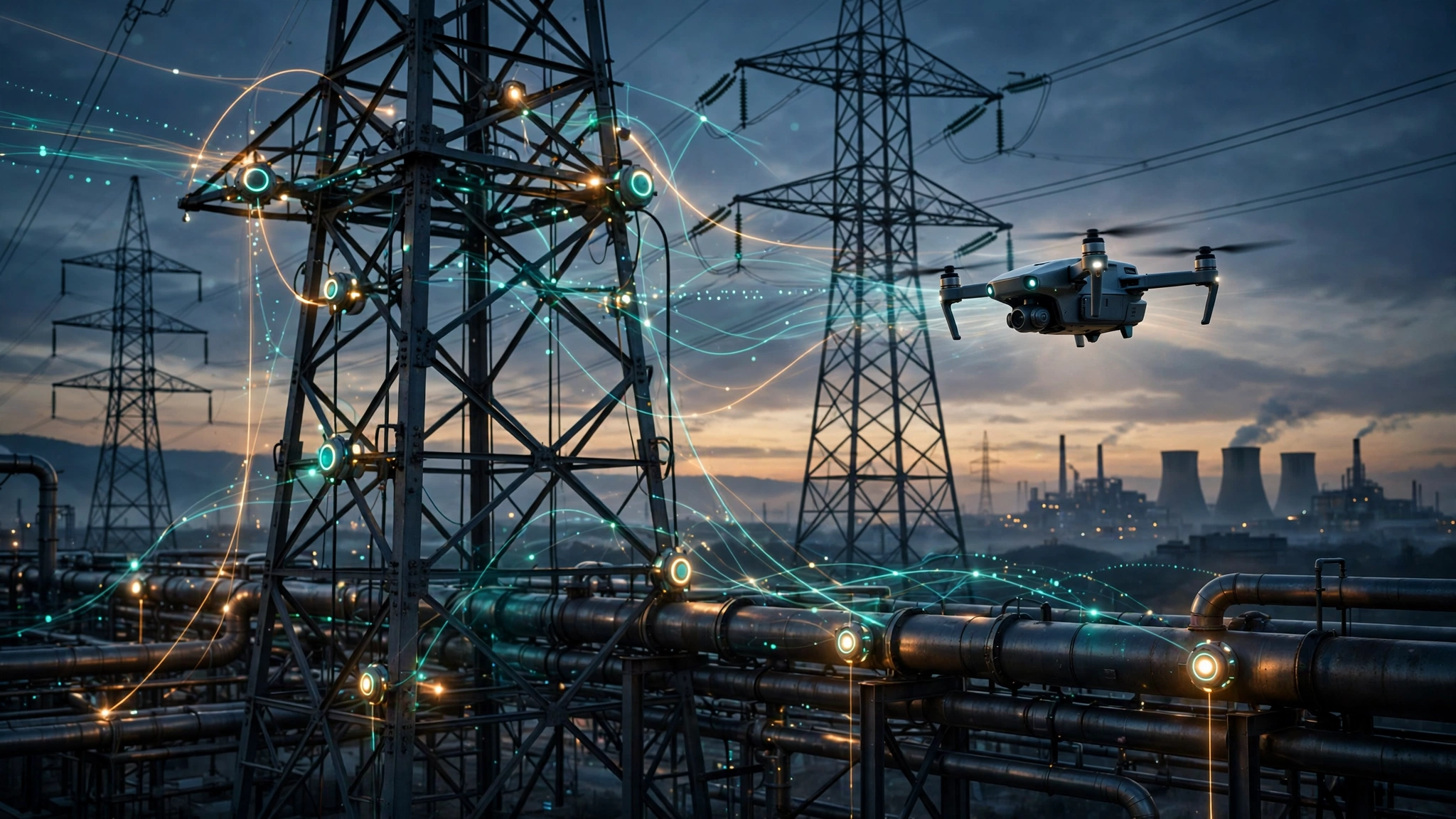
BrightAI's platform, called Stateful, pairs edge sensors fitted to utility poles, pipelines, compressors and tanks with autonomous robots, drones and wearable AI copilots for field crews. Instead of sending a person to check an asset on a fixed schedule, the system watches it continuously and flags problems as they develop.
The company says that matters because scheduled inspections mostly find nothing — Hawkinson puts it at two out of three visits — while real failures still slip through between visits. BrightAI claims its customers typically spot trouble an average of 51 days before what would have become a catastrophic failure.
The system is deployed at more than 50,000 locations and processes tens of trillions of sensor readings, according to the company. Customers named by BrightAI include GE Vernova, Reworld, Osmose Utilities Services, Azuria Water Solutions, Kodiak Gas Services and Diamondback Energy.
A $7 trillion waste problem
BrightAI estimates the annual waste from the inspect-detect-react model at more than $7 trillion worldwide, based on its survey of 12,158 operators across 16 industries. The survey found 98 percent of operators lack adequate visibility into their assets.
That headline figure is the company's own estimate and should be read as such. The outside research BrightAI cites — from the US Energy Department, the Environmental Protection Agency, Swiss Re and the National Safety Council — puts the cost of infrastructure failure alone at $2.5 trillion a year.
GE Vernova plans to use the platform across its power, wind and electrification businesses, a sign that at least one large buyer is treating the technology as operational rather than experimental.
What the money is for
BrightAI said it will direct the new funds primarily toward international expansion, taking the Stateful platform to more utilities and industrial operators outside the United States.
Hawkinson insisted he does not care about so-called unicorn status — the $750 million valuation leaves BrightAI short of the $1 billion mark — and said the point is to drag infrastructure maintenance out of what he calls the ancient Roman era.
Whether the pitch converts into independently verified savings at scale is the next test. For now, the round lands in a long run of AI-infrastructure fundraising, with investors betting that sensors and software can do a job that clipboards and calendars have done for centuries.