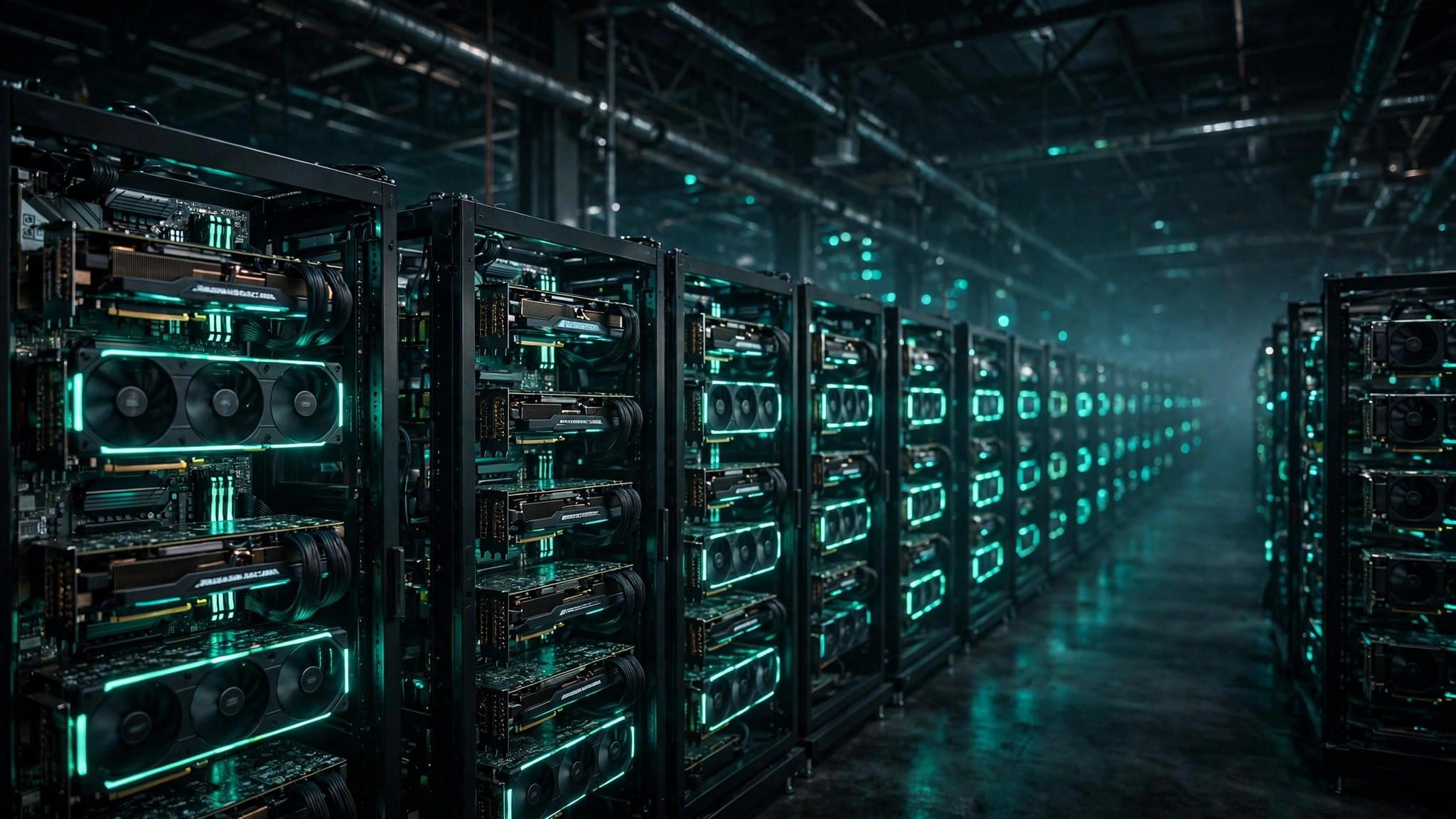
Australian data centre operator Firmus is preparing a $5 billion initial public offering to fund its growth, Reuters reported this week, citing two people familiar with a draft prospectus circulated to prospective investors. The company is due to begin trading on the Australian Securities Exchange on October 22.
The listing would be the second-largest IPO ever in Australia, behind only Telstra's $10 billion float in 1997, according to Dealogic data. Local media reports suggest Firmus could be valued at up to $60 billion after the IPO — an extraordinary figure for a company that has yet to turn a profit.
Heavyweight backers and customers
Firmus is backed by investors including Blackstone, and counts Nvidia, Meta and OpenAI among its customers — a client list that reads like a who's who of the AI boom. The share sale is expected to test investor appetite for companies building the physical infrastructure behind artificial intelligence, a segment where demand for computing power continues to outrun supply.
The company was founded in 2019 by Oliver Curtis and Tim Rosenfield. According to The Tech Capital, Curtis came to data centres from finance and mining engineering, and Firmus began designing systems for more than 1,000 GPUs from the outset. Australian government material describes its early business as bitcoin mining before its pivot into data centres and AI infrastructure — a path that gave the team deep experience in the two things AI computing needs most: power and cooling.
A loss-making bet on the buildout
The draft prospectus forecasts a loss after tax of $77 million for the first half of the financial year ending June 30, 2027, on a pro forma basis — and describes Firmus as historically loss-making. The losses were attributed to the costs of developing and growing the business to secure substantial customer agreements, with the proceeds of the IPO earmarked for further capital spending.
Notably, the document reportedly contains no forecasts beyond the first half of FY2027, meaning investors are being asked to back the company's growth story largely on contracted demand and the trajectory of AI compute needs. Firmus declined to comment on the figures.
The AI infrastructure gold rush
Firmus is riding a global wave of capital pouring into the physical backbone of AI. From Microsoft's $10 billion Middle East commitment to SoftBank's record bond sale to fund AI investments, money is chasing the same thesis: whoever controls computing capacity controls the AI economy. Data-centre operators have become some of the most sought-after assets in private markets, and a successful $5 billion listing would prove that appetite extends to public markets too.
The listing also highlights how the economics of AI infrastructure differ from traditional tech. Data centres require enormous upfront capital for land, power connections and specialised hardware, and years of buildout before revenue catches up — the classic profile of an infrastructure business, not a software one. Public investors in Firmus will be betting that contracted demand from the likes of Nvidia and OpenAI makes that wait worthwhile.
Why it matters for Pakistan
Firmus shows how AI infrastructure has become a capital-markets story: data-centre operators can now command valuations in the tens of billions before turning a profit. For Pakistan, which is pushing IT exports and courting foreign investment into technology parks and cloud facilities, the lesson is that hyperscalers and AI labs are hungry for compute everywhere — and governments that solve the hard parts, from cheap and reliable power to land, connectivity and regulatory clarity, can attract it. Pakistan's own startups will also be watching whether a loss-making infrastructure bet like Firmus flies with public investors, since that verdict will shape how capital flows to capital-heavy technology plays across emerging markets.