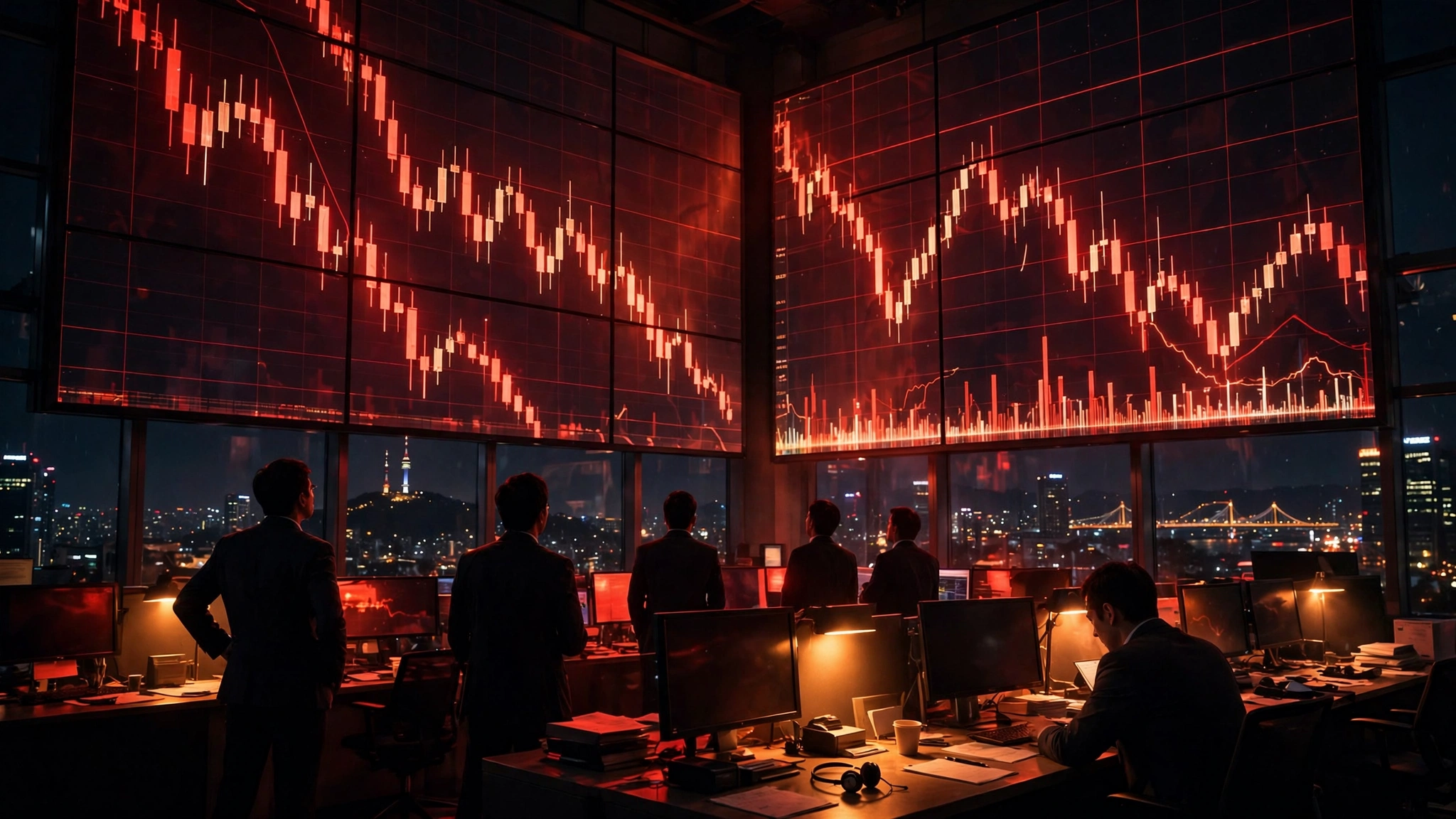
Seoul hits the brakes
Asian markets felt the full force of the global AI-stock unwind on Thursday, with South Korea halting trading on both of its main bourses after the Kospi and Kosdaq plunged more than 8%, and Japan's Nikkei 225 sliding nearly 5% in its worst session in months.
The selloff was a direct continuation of the Wall Street rout that erased roughly $80 billion from AI-linked shares a day earlier, as hotter-than-expected US inflation and mounting doubts over how debt-fuelled AI companies will fund their expansion kept investors on edge.
Korea's exchange operator triggered 'sidecar' trading halts — automatic five-minute suspensions on program selling — on the Kospi at 9:07 a.m. and the Kosdaq at 9:12 a.m. local time, after the benchmark index plunged more than 8% intraday to around 5,548, far below the 9,000-point all-time high it touched in June.
It was the first time both markets' sidecars fired on the same day in roughly 11 weeks. Trading was later halted outright for 20 minutes as losses mounted before resuming.
Foreign investors led the exodus, dumping a net 1.92 trillion won (about $1.4 billion) of shares by 10:30 a.m. in their eighth straight session of selling, overwhelming retail and institutional buying. The slide put the Kospi on course for its seventh consecutive losing session — its longest streak since September 2024.
Chip heavyweights bore the brunt. Samsung Electronics fell roughly 9 to 10%, while SK Hynix — once the poster child of Asia's AI rally — tumbled more than 11% on the day and now sits nearly 60% below the record high it set just four months ago, having shed more than $660 billion in market value.
A regional contagion
Japan's Nikkei 225 dropped 4.8% to 64,489 by the midday break, with chip-equipment maker Advantest plunging nearly 14%, Tokyo Electron down 7.3%, and SoftBank Group — a major backer of AI startups — off 9.4%. Taiwan's Taiex fell more than 3%, while China's chip-heavy Star 50 index touched its lowest level since April.
India stood out as the exception. The Sensex rose about 1.1% to above 73,600, led by the IT services firms investors had been dumping for most of the year — a sign global money is rotating toward markets barely exposed to the AI hardware trade.
Analysts pointed to two unchanged triggers from the US session: September US consumer inflation, running at its fastest pace in five months, has revived bets that the Federal Reserve could raise rates rather than cut them; and CoreWeave's bonds have slid to levels that typically signal distress, with yields surging toward 15% and notes due 2032 changing hands near 78 cents on the dollar.
What comes next
Whether this is a healthy de-risking or the start of something uglier hinges on two things: the Fed's next move, and whether the AI giants can show their trillions in capital spending are turning into actual earnings. Strong results from Samsung and ASML failed to calm nerves this week, and a closely watched US gauge of chip stocks has now lost $1.6 trillion in market value across six straight ses
For now, Asia's markets are absorbing the worst of the selloff — and Korea's circuit breakers may not have fired for the last time.
By Hamza Faisal