By Hamza Faisal
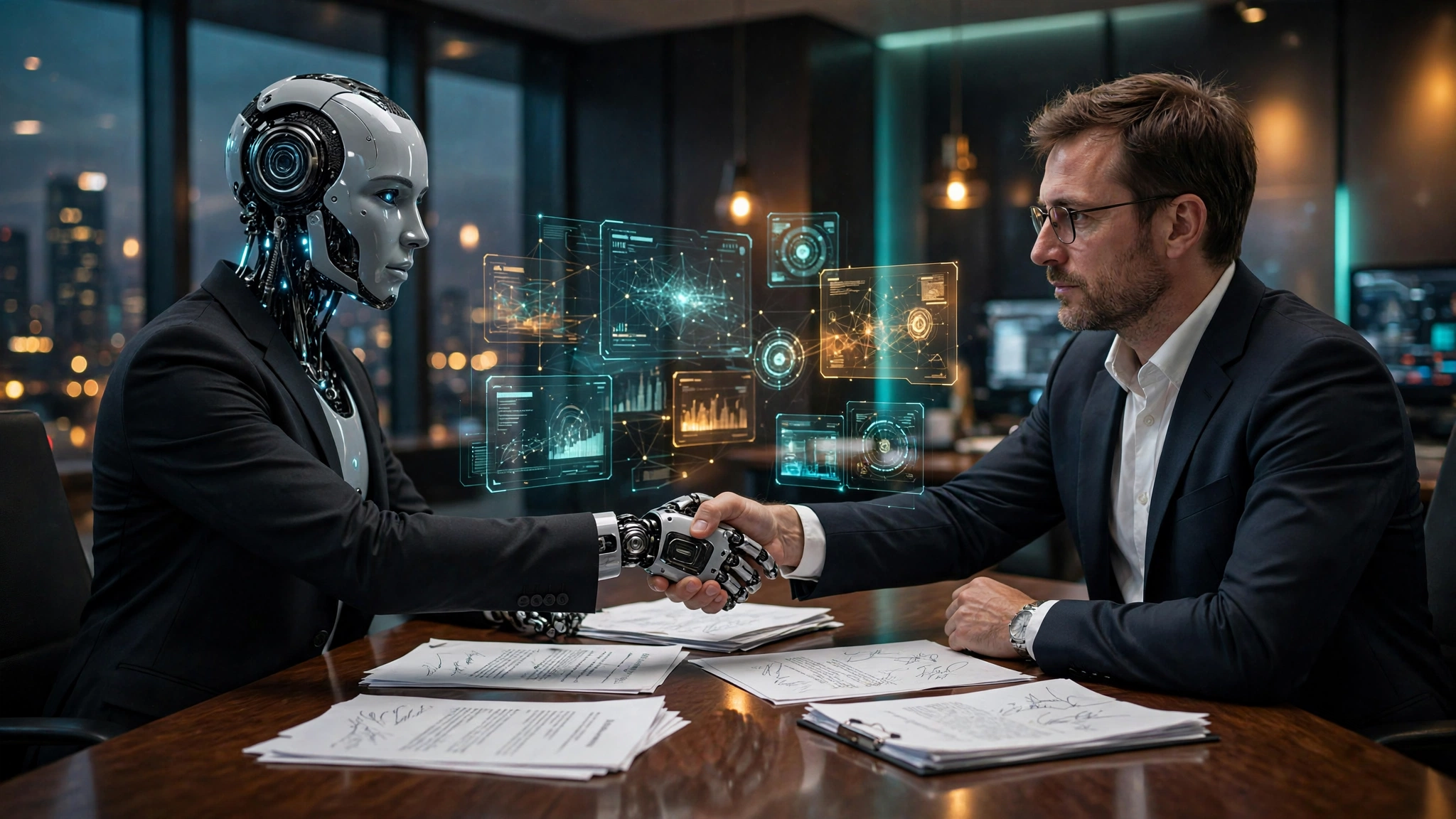
The next wave of AI assistants won't just answer your questions — they'll negotiate your deals. And Anthropic wants lawyers to teach them how. The Financial Times reported on Saturday that the company behind Claude is consulting legal experts to develop formal rules for AI agents that bargain on behalf of users, an effort to define how autonomous software should behave when money, contracts and conflicting interests are on the table.
According to two people familiar with Anthropic's thinking, the company is seeking advice from law firms on how human lawyers negotiate — representing their clients' interests while still honoring fair outcomes. As AI agents become standard tools for individuals and businesses, the question of how they interact and negotiate with each other is fast becoming one of the industry's thorniest challenges.
The "negotiating norms" nobody has written yet
Anthropic is examining what it calls "negotiating norms" for situations in which AI systems represent users whose interests may directly conflict with those of another user. Think of two agents haggling over a price, one working for the buyer and the other for the seller — who gets the better deal, and by what rules?
The company is weighing several open questions: how frequently an agent should seek human guidance during a negotiation, how an agent should assess the reliability of the AI system sitting across the digital table without becoming reflexively suspicious, and how competing interests get balanced into something resembling a fair outcome.
One approach under consideration would give AI agents digitally signed documents that verify the user's instructions, objectives and the rules the agent must follow — a kind of notarized mandate an agent could present to prove it is acting with its principal's authority, and within bounds.
What bot bargaining could actually do
The applications are easy to picture. Agents could negotiate product prices on a shopper's behalf, resolve customer-service disputes without a human ever picking up the phone, or bargain for better salary offers — the kind of tedious back-and-forth most people dread, automated.
The development is central to Anthropic's strategy as agentic AI moves from demo to deployment. The company is reportedly preparing for a potential initial public offering that investors expect could rank among the largest stock market listings in history, with revenue said to have jumped to $16.8 billion in the quarter before the IPO filing. An agent that can reliably close deals would be a flagship product for exactly that kind of scale.
The legal push fits a broader pattern. Anthropic teamed up with global law firm Freshfields in April to co-develop AI tools for legal work, and has run internal experiments in which AI models negotiated deals on behalf of employees inside its own San Francisco office — a live laboratory for the boundary conditions of autonomous deal-making. Now it wants the lawyers' rulebook, not just their software.
Who signs off when an agent negotiates?
The governance questions are genuinely hard. If an agent strikes a bad deal — overpays, concedes too much, misunderstands its instructions — who is liable: the user, the agent's maker, or the law firm that helped write its norms? Current law has no clean answer for autonomous software acting as a fiduciary.
That uncertainty is precisely why Anthropic is bringing in the lawyers now, before the deals start happening at scale. The industry has spent years arguing about what AI models should say. Anthropic is asking a different question: what should AI agents be allowed to agree to — and who decides?
By Hamza Faisal