By Hamza Faisal
Ant Group says its open-source LingBot robot models have been downloaded more than 2.2 million times in the nine months since their first release, and robots running them are now picking medicines off the shelves of pharmacies in Shanghai during normal trading hours. The embodied-AI unit behind the models, Robbyant, presented the full LingBot 2.0 stack at the World Internet Conference in Wuzhen this week, pitching a single open robot brain that can be reused across different machines and jobs instead of training a separate brain for each one.
The figures also include more than 33,000 stars on GitHub. For a field where most capable robot models still live behind closed doors, that makes LingBot one of the most widely adopted open robot brains in circulation — and the pharmacy deployment is an early test of whether open models can do useful work outside the lab.
One stack, six models
The 2.0 lineup splits into three layers. LingBot-Vision and LingBot-Depth handle perception, LingBot-Video and LingBot-World model how the world behaves, and LingBot-VLA and LingBot-VA turn instructions into physical action. The design goal is one model driving many robot bodies: the same software steering a wheeled humanoid, a single-arm rig, or a pharmacy picker.
The action model at the stack's core, LingBot-VLA 2.0, is a 6-billion-parameter model open-sourced in July and trained on roughly 60,000 hours of footage — about 50,000 hours of robots performing tasks and 10,000 hours of first-person video of humans doing the same jobs. Ant says it was trained across 20 different robot body types from 17 manufacturers, with a single inference step taking about 130 milliseconds on one gaming graphics card.
The stack is also spreading through the open-source ecosystem. LingBot-VLA and LingBot-VA have been adapted to Hugging Face's LeRobot platform, LingBot-Vision was merged into the main branch of the timm vision library, and LingBot-World runs on both vLLM and SGLang, with Nvidia integrating it into its open-source FlashDreams world-model library.
From downloads to drugstore aisles
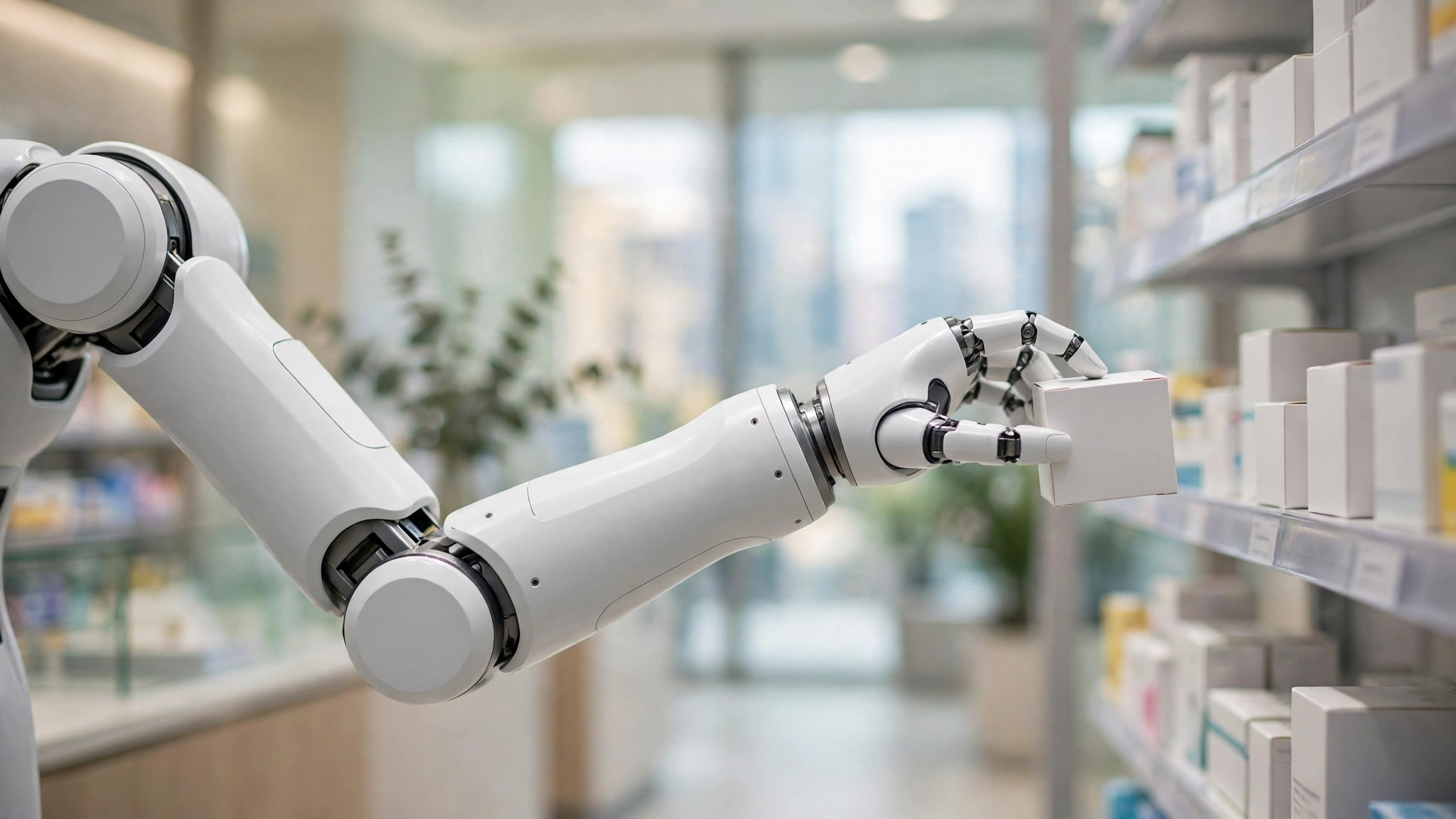
The most concrete deployment so far is also the most ordinary: robots working the narrow 80-centimetre aisles of Guoda pharmacies in Shanghai, picking medicines during regular opening hours. Ant and Guoda showed the setup at the Wuzhen summit, and the company says it has signed an agreement to explore retail and logistics uses for the models in the Middle East.
Research labs are picking the models up too. Ant says its work has been cited by Physical Intelligence and Generalist AI, that Stanford's OpenWAM project adapted the LingBot-VA module, that a Korean project called FastOPD used LingBot-VLA as a teacher model to train lighter policies, and that EPFL used LingBot-Map to reconstruct coral reefs in 3D.
Interest is also showing up in competition. The first LingBot embodied-model challenge drew 1,855 teams and 3,252 participants from 648 universities and companies across 13 countries in its online preliminary round.
An open bet on general-purpose robots
The figures are Ant's own, and downloads are not the same as deployments — most of the 2.2 million downloads will be researchers and hobbyists experimenting, not robots on the job. But the combination of a full open stack, a real retail deployment, and adoption by outside labs puts LingBot in the small group of open robot models with evidence beyond benchmarks.
The bigger question is whether one open model can genuinely span different robot bodies and tasks. Ant's answer, delivered at Wuzhen, is that the stack is ready to try — and the pharmacy aisles of Shanghai are where it is being put to the test first.


