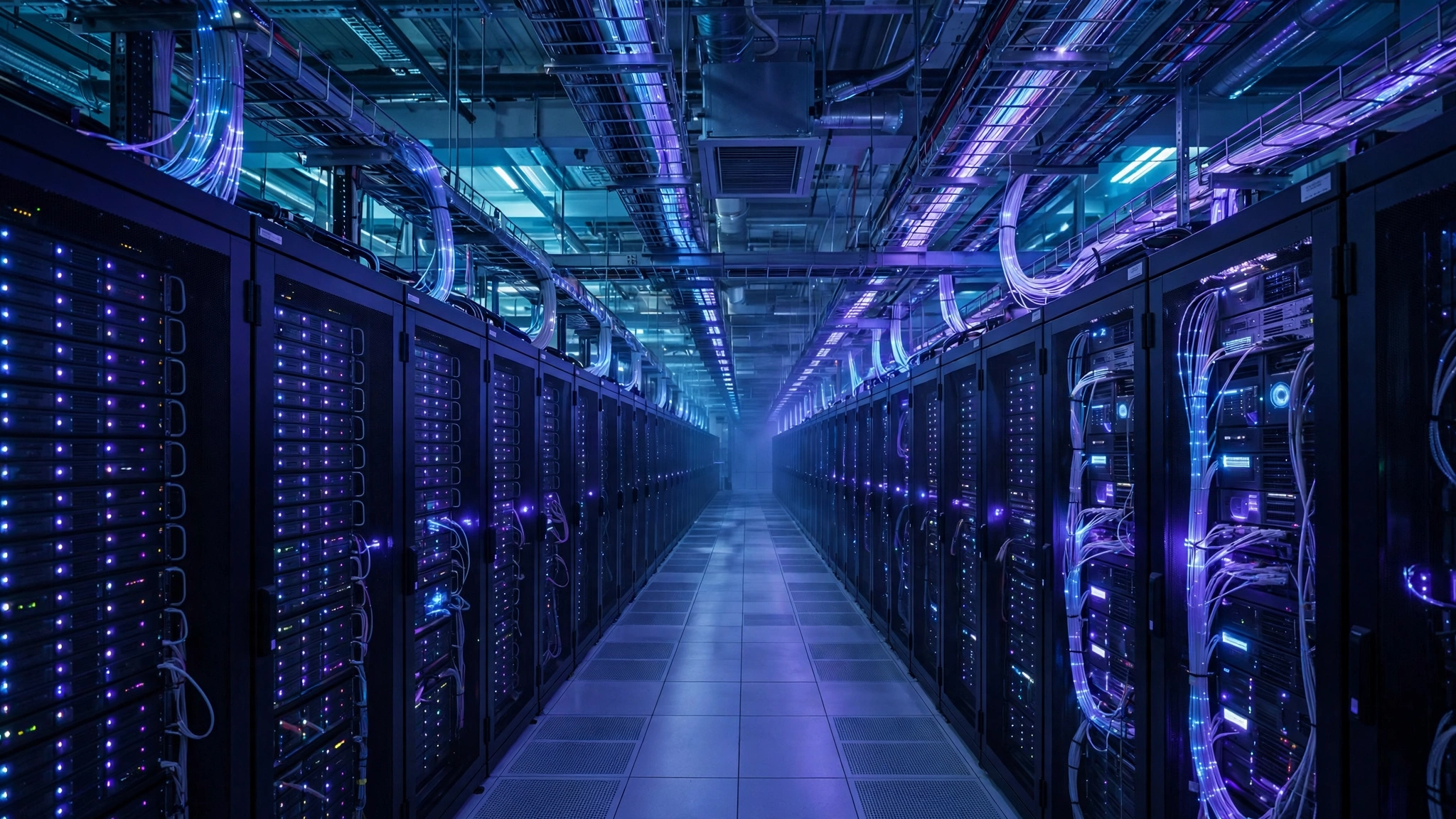
The next front in the AI chip war is not about training bigger models — it is about running the AI agents that are multiplying across the internet. AMD chief executive Lisa Su took the stage at the Open Compute Project Global Summit in San Jose on October 12 to unveil Helion, a new server rack designed specifically for AI agents, marking the company's most direct attempt yet to break Nvidia's grip on AI infrastructure.
Helion is built on Helios, the AI server rack AMD introduced earlier this year, but with a different philosophy. Where today's AI systems concentrate almost entirely on GPUs, Helion is designed around central processing units, letting GPUs plug in flexibly as needed. AMD says the rack can hold up to 32,768 CPU cores and delivers roughly 40 percent higher compute density than competing products.
Built for the age of AI agents
Su's keynote argument was that agents change what data centers need to do. Traffic generated by AI agents has grown 14 times this year alone, she said, and monthly AI token throughput has risen 95 times over the past two years to 400 quadrillion. Agents do more than generate text: they run programs, shuffle data between tools and coordinate multi-step tasks, all of which keeps CPUs busy rather than leaving them waiting on GPUs.
That is why AMD is betting the server CPU market itself is about to boom. Su projected the market will grow at an average of 50 percent a year over the next four to five years, surpassing $200 billion by 2030, with AI agents as the new growth engine.
$5B Anthropic bet and Azure's vote in one week
Helion arrived in the same week AMD landed two of the industry's most demanding compute buyers. The company will invest up to $5 billion in Anthropic as part of a strategic partnership under which Anthropic will deploy up to two gigawatts of AMD's Helios AI infrastructure, combining Instinct MI450 Series GPUs, Epyc Venice CPUs and Pensando networking. The first gigawatt is expected to go live in the first half of 2027, and the money is released as Anthropic hits deployment milestones rather than paid upfront.
Days earlier, Microsoft said it would run Azure's AI workloads on the same Helios platform. Unlike AMD's arrangements with OpenAI and Meta, which included warrants for up to 160 million shares each, the Anthropic stake carries no warrants — a straight cash investment with capped exposure.
An open ecosystem against Nvidia
AMD is pitching Helion as the open-ecosystem alternative to Nvidia's tightly integrated stacks, where AMD's standard CPUs, GPUs and networking components can be mixed and matched by any operator. Whether hyperscalers actually shift volume away from Nvidia will depend on execution, but landing Anthropic and Microsoft in a single week gives AMD its strongest proof point yet that frontier AI can run on something other than Team Green.
By Hamza Faisal