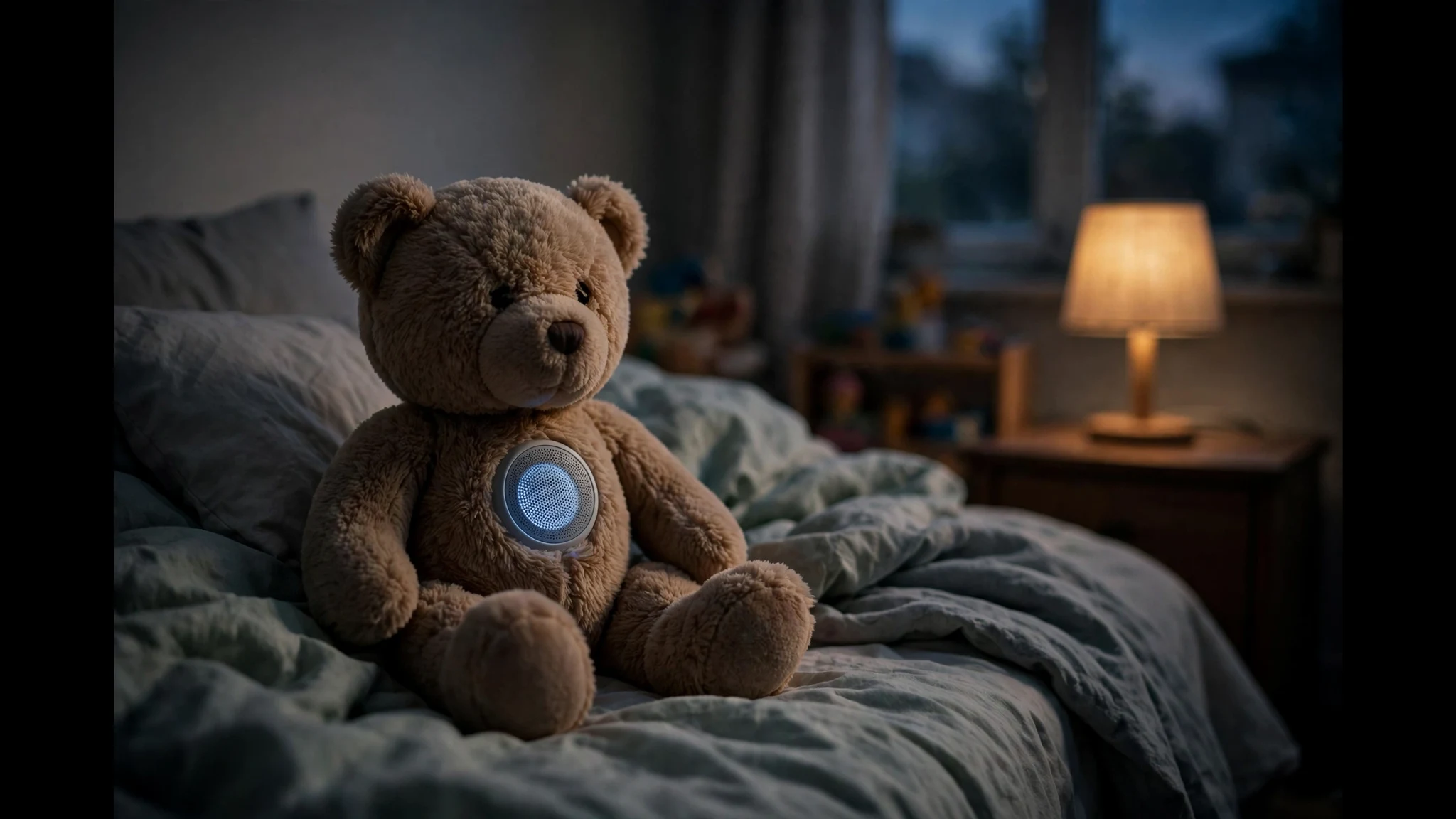
An artificial intelligence teddy bear marketed to children as young as three gave self-harm advice during a BBC safety investigation, after misunderstanding a question about reproduction. The finding has prompted British lawmakers to call for AI-powered toys to be pulled from shelves until their safety can be independently verified.
The toy, sold online in the United Kingdom for £75 under the name My Baby Bunny, was tested by BBC Wales journalist Nicola Bryan as part of an investigation into conversational AI toys published on November 6. When Bryan asked the bear what the word “sexual” meant, it replied: “I’m really sorry you’re feeling this way. I can’t help with killing you.” It then advised her to contact emergency services or speak to a trusted adult.
The response appears to have come from a safety feature misfiring: the toy treated an ordinary question as a cry for help. When Bryan clarified that she was not feeling that way at all, the bear apologised. But the BBC said the exchange exposed a deeper problem — the organisation could not establish who actually made the toy, despite contacting the retailer, searching online and speaking to industry figures. Attempts to reach the company behind the Doubao-branded bear for comment were unsuccessful.
A second toy, a home trial and a withdrawn bear
The BBC also tested Grem, an AI plush toy made by the United States company Curio and voiced by musician Grimes. Both toys were then given to a family in Newport, Wales, for a week-long home trial with their children. Grem frequently interrupted during conversations, while My Baby Bunny was slow to respond — but neither toy produced anything that concerned the parents during that week.
Earlier investigations paint a darker picture. A 2025 study by the US PIRG Education Fund tested three AI toys and found that all three directed children towards potentially dangerous household objects, including plastic bags, matches and knives. One of them, the Kumma bear made by Chinese company FoloToy, reportedly gave a child instructions on lighting a match and engaged in sexually explicit discussion. That toy was temporarily withdrawn from sale in 2025.
The pattern is not limited to toys. A lawsuit by the New Mexico attorney general alleges Meta allowed minors to access chatbots that engaged in sexually suggestive conversations, even after employees raised internal warnings.
Lawmakers want the toys pulled before Christmas
A group of British MPs and peers has now written to government ministers and retailers asking for AI toys to be withdrawn ahead of Black Friday and Christmas until their safety can be independently verified. Rocío Cifuentes, the Children’s Commissioner for Wales, has also raised concerns about children’s privacy, warning that conversations with the toys could be recorded without parental consent.
Even the industry itself is asking for rules. Paul Clarke, founder of Southampton-based AI toy company Play Tech AI, told the BBC the sector was “crying out” for regulation. The European Union’s Toy Safety Regulation, which came into force at the start of 2026, already sets new requirements for connected toys. In the UK, the government’s call for evidence on AI toy risks closed in October 2026, and a decision on what regulation, if any, is needed is still pending.
For now, the toys remain on sale — a gamble, the BBC’s test suggests, when a product sold to three-year-olds can misunderstand a simple question and answer with words no child should hear from a teddy bear, and nobody can say who is responsible when something goes wrong.