By Hamza Faisal
Thailand is quietly becoming one of the places where the AI and electric-vehicle boom gets built. Makers of the capacitors, magnets and battery materials inside AI servers and electric cars have filed 35 advanced materials projects worth about $690 million with the country's Board of Investment (BOI) since 2023, the agency said on October 24, 2026.
The filings, worth 23.5 billion baht and lodged through the first half of 2026, show global suppliers moving upstream capacity into Thailand as demand for AI computing, electric vehicles and clean energy keeps climbing. The BOI, the government's investment promotion agency, framed the wave as a shift for one of Southeast Asia's largest economies: from downstream assembly toward the high-value materials on which future industries are built.
What the projects cover
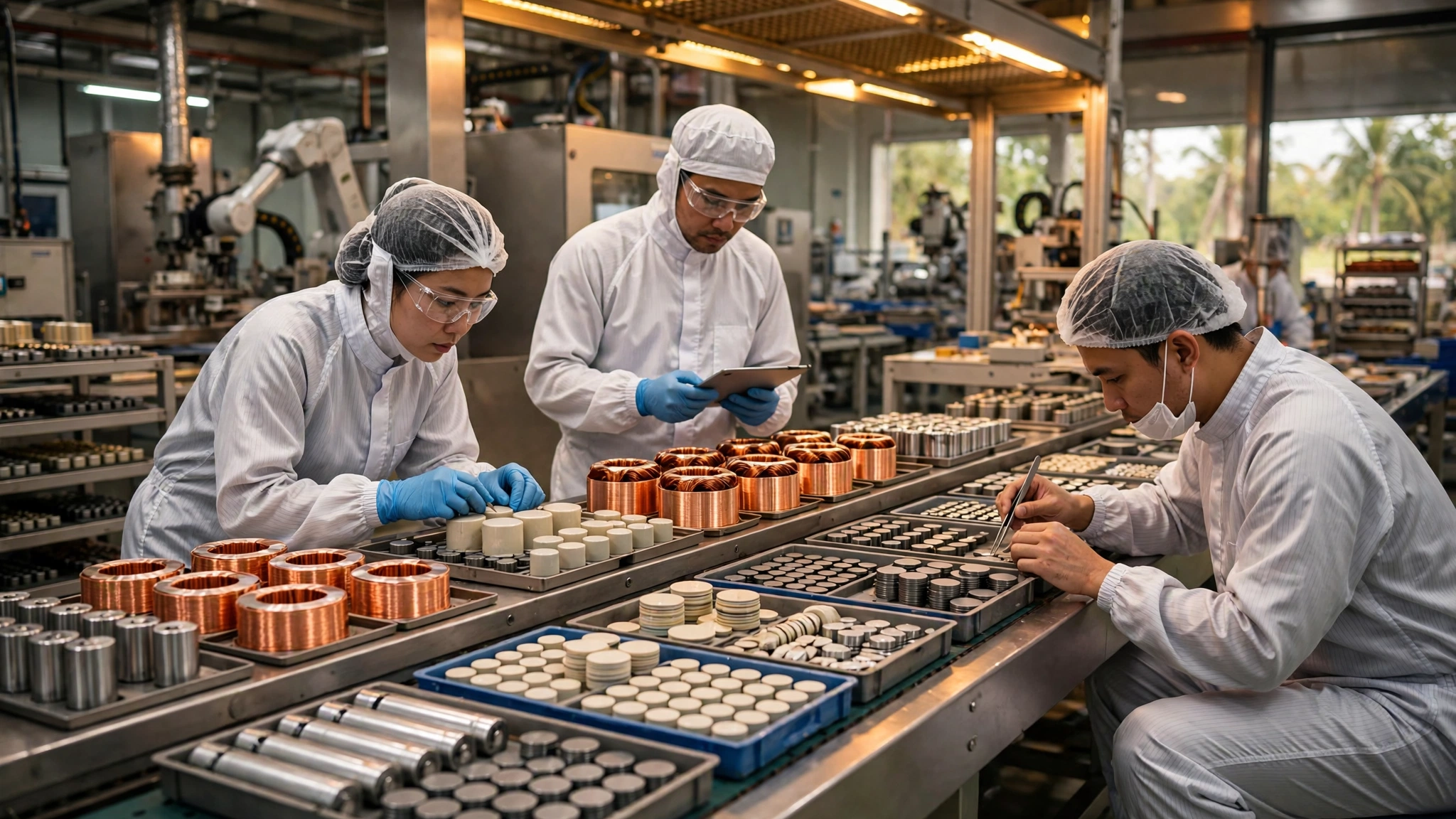
The projects span the unglamorous components that decide how well modern devices perform. They include multilayer ceramic capacitors (MLCCs), thermal graphite films, high-performance ceramics, battery and fuel-cell materials, neodymium magnets, glass and quartz fabrics for printed circuit boards, and nanomaterials for precision manufacturing.
The scale of demand is easy to understate. A single high-end AI server can use up to 30,000 MLCCs, the tiny components found in everything from smartphones to data-centre hardware. In AI computing and clean energy, the BOI noted, lighter, more heat-resistant and more conductive materials directly determine how well devices perform — which is why suppliers are racing to build capacity closer to the factories that need them.
Why Thailand, and why now
Thailand's pitch is industrial depth. The country already hosts large automotive and electronics manufacturing bases, and the new filings suggest suppliers want to sit nearer to those customers rather than shipping specialised materials across the world. Building that capacity at home also cuts reliance on imports, a strategic concern as governments everywhere scrutinise supply chains for chips, batteries and rare-earth magnets.
"The world is moving toward products that are smaller and lighter, yet stronger and more efficient," said Narit Therdsteerasukdi, the BOI's secretary general. "Producing advanced materials in Thailand is key to building sustainable industrial capacity, reducing reliance on imports, and opening the door for Thai companies to join higher-value supply chains."
What to watch next
Filings are not factories, and the $690 million figure reflects investment plans rather than completed plants. The test now is how quickly these projects break ground, hire and start shipping — and whether Thai firms move from supplying materials into designing them. If they do, Thailand's role in the AI and EV supply chain will look very different from the assembly work it is known for today: less the place where things are put together, more the place where the materials inside them are made.
By Hamza Faisal